How to Build a Culture of Corrective Action That Lasts
The Secret to Corrective Action That Actually Sticks
Most organizations don’t struggle to find problems. They struggle to fix them — permanently. Tools like 5 Whys, Ishikawa diagrams, FMEA, and nonconformance reports are common. Yet the same issues keep resurfacing: repeat defects, late deliveries, customer complaints, audit findings that reappear year after year.
The gap usually isn’t technical. It’s cultural.
Corrective action (CA) thrives or dies based on leadership behavior, everyday habits, and how people talk about problems. This article gives you a practical blueprint to build a culture where corrective action is fast, honest, and sustainable — without adding bureaucracy or more meetings.
1) What a Strong Corrective Action Culture Looks Like
A healthy corrective action culture has five visible traits:
- Problems are process-driven, not people-driven.
Conversations focus onwhat in the system allowed this to happen, not who messed up. Blame shuts down learning; process focus opens it up. - Issues surface early and often.
People raise risks and near-misses because it’s safe (and rewarded) to do so. No “shoot the messenger.” - Leaders make CA visible.
Leaders ask about risks, progress on root causes, and learning outcomes in routine reviews — not just before audits. - Root causes are specific and verifiable.
Vague causes like “human error” or “lack of training” are replaced with provable system causes, such as “no error-proofing; step 3 lacks physical check” or “job aid absent at point of use.” - Improvements stick.
Actions change the process, documents, training, controls, and metrics — and results are monitored long enough to confirm they worked.
2) Why Corrective Action Fails (And How to Fix It)
Failure Pattern A: Speed over understanding
- Symptom: Teams jump from problem to fix (“We retrained them”) to close the ticket.
- Fix: Institute a mandatory “evidence of cause” step. No action until the cause is observable, measured, and reproducible.
Failure Pattern B: Blame and fear
- Symptom: People sanitize reports or avoid logging issues.
- Fix: Leaders publicly model “no-blame” language: “What in our process allowed this?” Celebrate risk-raising behaviors.
Failure Pattern C: Generic CAPAs
- Symptom: Actions say “retrain,” “update SOP,” or “communicate.” Problems return.
- Fix: Require at least one engineered control (poka-yoke, interlock, checklist at point of use) or a process change verified by trial.
Failure Pattern D: No follow-through
- Symptom: CA is closed once actions are done, not when results improve.
- Fix: Add a “sustain” gate: 30–90 days of performance monitoring with a defined success threshold.
Failure Pattern E: Overloaded owners
- Symptom: The same few people own dozens of CAPAs; lead times balloon.
- Fix: Cap open items per owner; triage ruthlessly; close or merge low-value items; timebox investigations.
3) The Leadership Playbook: 7 Habits That Change Culture
- Ask better questions.
Replace “Who caused this?” with “What in the system let this happen, and where else could it occur?”
Follow with: “What evidence do we have that this is the true cause?” - Run a 15-minute weekly CA huddle.
Stand-up review of 5–10 items only: status, blockers, next experiment. Visibility drives momentum. - Set a “no blame, full accountability” norm.
People aren’t at fault; processes are. But we are accountable to improve the process. This distinction matters. - Reward the messenger.
Publicly recognize near-miss reporting, risk identification, and thorough root-cause work — not just firefighting. - Mandate experiment-based fixes.
Every CA includes at least one change tested on a small scale with a predicted outcome (“We expect defects to drop from 2.4% to <1.0% in 2 weeks”). - Protect time for problem-solving.
Carve out set hours for owners to investigate. Calendar time signals priority. - Close the loop with data.
No CA is “complete” until the metric moves and stays there. Hold the line.
4) A Simple, Repeatable CA Framework (That Teams Actually Use)
Use this five-step flow on one page. It’s lean, visual, and hard to fake.
Step 1 — Define the Problem (Go and See)
- What happened? Where? When? How often?
- What’s the impact (safety, quality, cost, delivery, morale)?
- Include a photo or plot if possible. Data makes the problem real.
Step 2 — Contain
- Immediate actions to protect the customer/operation.
- Timeboxed (48–72 hours) and reversible.
Step 3 — Find the Cause (Show Evidence)
- Use 5 Whys, Fishbone, or fault tree — but require evidence.
- Convert “human error” to system cause: What allowed the error? Missing visual cue? Similar part numbers? Hard-to-read spec?
Step 4 — Fix & Prove
- Propose countermeasures. Include at least one of:
- Eliminate the error (poka-yoke, redesign)
- Prevent the error (interlocks, checklists, automation)
- Detect the error early (inspection at source)
- Run a trial (small batch, pilot area). Predict outcome and measure.
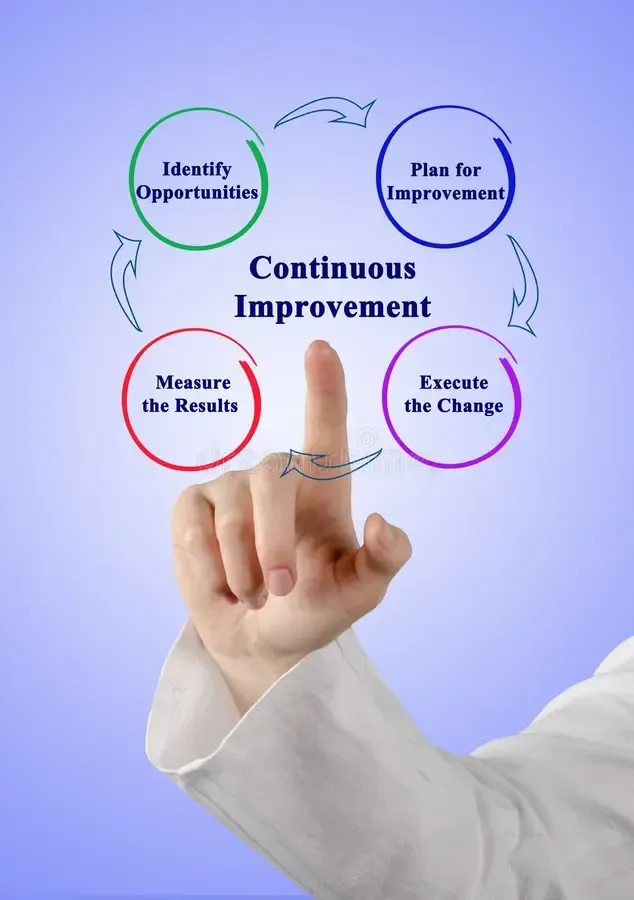
Step 5 — Sustain
- Update SOP, job aid, training, and control plan.
- Monitor metric for 30–90 days; define success threshold.
- Audit the process once post-close to verify adherence.
One-page rule: If your CAPA can’t be summarized on one page with before/after data, it’s probably not clear enough to sustain.
5) Practical Tools & Templates (Use Tomorrow)
- Problem Statement Template (fill-in-the-blank)
“On [line/area], from [date] to [date], [defect/issue] occurred [X] times, affecting [customers/process/units], resulting in [impact].” - Evidence Checklist for Root Cause
- We observed the problem at the point of occurrence
- We recreated the failure (or have logs/samples)
- We ruled out confounders (materials, operators, environment)
- We can identify where else this cause could exist
- Countermeasure Menu (pick at least one engineered control)
- Physical poka-yoke: keying, sensors, color-coding, fixtures
- Digital validation: required fields, dropdown constraints, alerts
- Standard work at point of use: laminated job aids, photos, torque values
- Sequencing: checklists with verbal call/response or scan-to-advance
- Visual management: defect libraries, pass/fail samples
- Sustain Plan Snippet
- SOP updated? Version control OK?
- Training completed? Sign-offs captured?
- Audit added to LPA (layered process audit) or gemba checklist?
- Metric owner + review cadence defined?
6) Metrics That Matter (and the Targets to Aim For)
Pick a small set; review weekly:
- Repeat Issue Rate: % of CAPAs tied to previously seen causes
- Target: <10% within 6 months
- Lead Time to Root Cause: Days from problem logged to evidence-backed cause
- Target: <10 business days for Tier 2 issues; <20 for complex
- Action Effectiveness: % of CAPAs that hit the success threshold during sustain window
- Target: ≥85%
- Near-Miss / Risk Reporting Rate: Signals psychological safety
- Target: Month-over-month increase until stable
- Owner Load: Average open CAPAs per owner
- Target: ≤5 (beyond that, cycle times explode)
7) A Real-World Example (Before/After)
Context: Assembly defects: mis-torque on fasteners led to field failures.
Before: Repeated “retrain operators” CAPAs; defects returned every quarter.
After (new culture + framework):
- Cause evidence showed torque driver calibration drift + similar part trays.
- Countermeasures: auto-shutoff drivers with digital verification; color‑coded bins; checklist scan step.
- Results: Defect rate dropped from 1.8% to 0.3% within 4 weeks; sustained <0.2% for 90 days.
- Learning shared to two sister lines with identical risk.
Takeaway: Training didn’t fix it; engineered controls did. Leadership’s insistence on evidence prevented another “check-the-box” CA.
8) How to Kickstart This in 30 Days
Week 1 — Reset the conversation
- Hold a 30-minute leader briefing: “No blame, full accountability” + one-page CA standard.
- Announce a 15-minute weekly CA huddle (same day/time).
Week 2 — Pick 3 active items
- Apply the five-step framework; require evidence for cause; redesign any generic CAPAs.
Week 3 — Run experiments
- Pilot at least one engineered control per item; predict outcomes; measure daily.
Week 4 — Sustain
- Update SOPs, visual aids, and LPAs; define metrics and owners; share one success story company-wide.
9) Frequently Asked Questions
Q: We’re not a manufacturer. Does this still apply?
A: Yes. Replace “defects” with service failures, backlogs, rework, missed SLAs, IT incidents, or safety near-misses. The cultural levers and framework are identical.
Q: How do I handle a chronic “training issue”?
A: Ask: What makes the correct action hard and the incorrect action easy? Then invert the friction (design, layout, digital guardrails) and reinforce with point-of-use aids.
Q: What if leaders don’t have time for another meeting?
A: Limit to 15 minutes. Reviewing the right few CAPAs weekly reduces firefighting elsewhere.
10) The Bottom Line
Sustainable corrective action isn’t more paperwork — it’s better leadership and clearer habits. When you normalize problem‑talk, insist on evidence, and embed engineered controls, issues stop repeating and performance compounds. If you want this culture, start small: one page, one huddle, one engineered fix. Then keep closing the loop until the results stick.
Want help?
We run hands‑on workshops to install this CAPA framework, tune your metrics, and coach leaders on the behaviors that make it last.
Reply to this email to schedule a 45‑minute discovery call or ask for the one‑page CAPA template.